





Moving into a dorm or first apartment is exciting, but it is easy to overbuy. Social media move-in videos often show perfectly styled rooms filled with decorative pillows, storage bins, lamps, and matching accessories. Real dorm life is usually less polished: the room is small, laundry may be several floors away, and the bed often doubles as a sofa, reading chair, and study space.
A useful freshman bedding setup should do three things well: make sleep comfortable, handle frequent washing, and adapt to changing room temperatures. Start with the basics, then add a few flexible pieces that will still be useful after freshman year.
Confirm the Bed Size Before Shopping
Many U.S. college dorms use Twin XL mattresses, which are usually about 80 inches long. Standard Twin sheets may fit the width but come up short at the end of the mattress.
Do not assume every residence hall uses the same dimensions. Check the housing information provided by the college before ordering. Universities, such as UW–Madison publish room and mattress details for students preparing to move in.
Two sheet sets are usually enough. One can stay on the bed while the other is being washed, which is useful when the laundry room is busy or when a late-night spill makes an immediate change necessary.
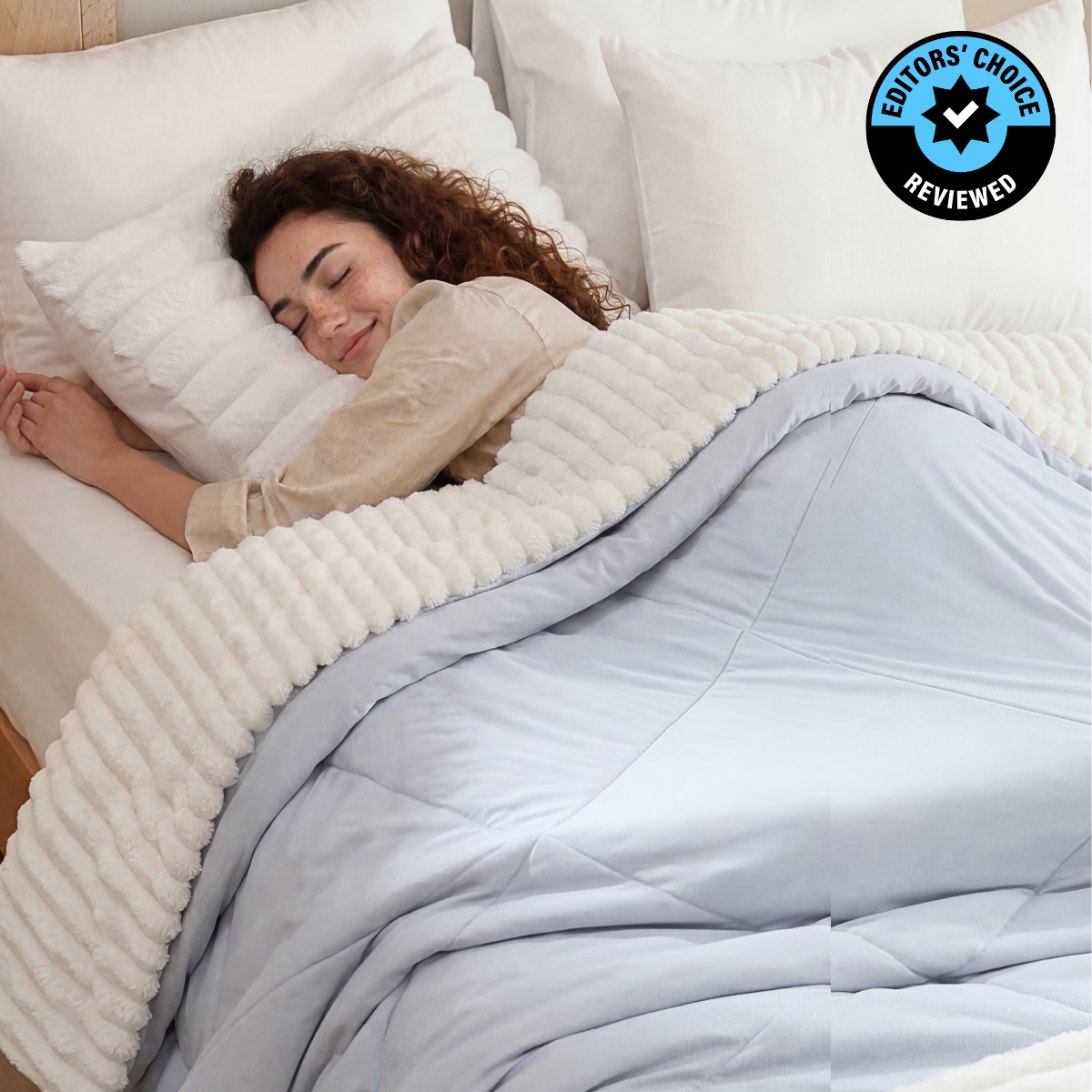
For students who sleep warm, breathable or cooling sheets may feel more comfortable in a dorm that remains warm through early fall. The most useful set is not necessarily the most luxurious one; it is the one that fits securely, washes easily, and feels comfortable throughout the semester.
Choose a Comforter You Can Layer
Dorm temperatures can be unpredictable. One room may feel warm and stuffy, while another becomes cold whenever the air conditioning or heating system turns on.
A very heavy comforter can become uncomfortable in a warm room. A lightweight or cooling comforter is often easier to live with because it can be used on its own during warmer months and paired with a knit blanket when temperatures drop.
This approach also makes seasonal changes simpler. Instead of storing two bulky comforters, students can keep one main sleep layer and adjust the warmth as needed.
The CDC recommends keeping the bedroom comfortably cool as part of a healthy sleep environment. Individual preferences vary, but bedding that allows heat to escape can be especially useful in small rooms with limited airflow.
When choosing a comforter, consider how easy it is to wash and whether the size will still work outside the dorm. A versatile Twin or Twin XL option may later be used on a guest bed, daybed, or apartment sofa.
Use a Duvet Cover to Make Laundry Easier

A dorm bed is rarely used only for sleeping. Students may sit on it in daytime clothes, place backpacks near the foot, eat snacks while studying, or invite friends to sit down.
A duvet cover creates a washable outer layer between everyday dorm life and the comforter underneath. When makeup, coffee, or food lands on the bed, washing the cover is usually easier than cleaning a bulky comforter.
It also gives students a simple way to change the room’s look. A neutral comforter can remain in use while the duvet cover changes with personal style or future apartments.
Look for a cover with interior ties that help keep the insert in place and a closure that is easy to use. Smooth, breathable fabrics work well in smaller rooms, while colors such as white, cream, soft blue, gray, or sage are easy to coordinate with sheets and blankets.
Add a Knit Blanket for Everyday Use
A knit blanket is one of the most flexible items in a dorm room.
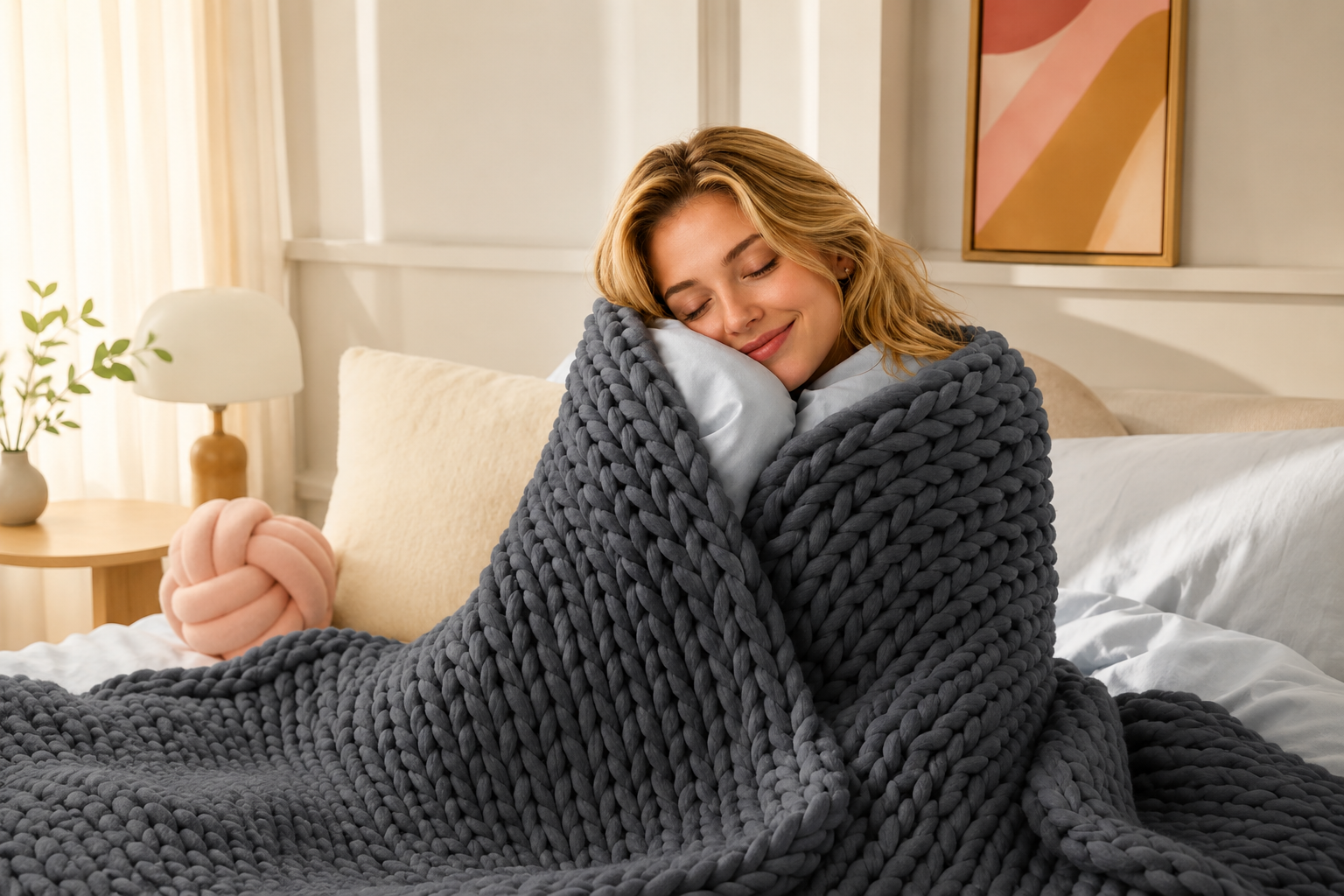
It can be folded across the foot of the bed, used while reading, carried into a shared lounge, or added over the comforter on a colder night. During the day, it can soften the look of a plain dorm bed without taking up the space of several decorative cushions.
Unlike décor chosen only for one room, a good knit blanket can move from freshman housing to a later apartment. It works on a sofa, reading chair, guest bed, or home office long after the school year ends.
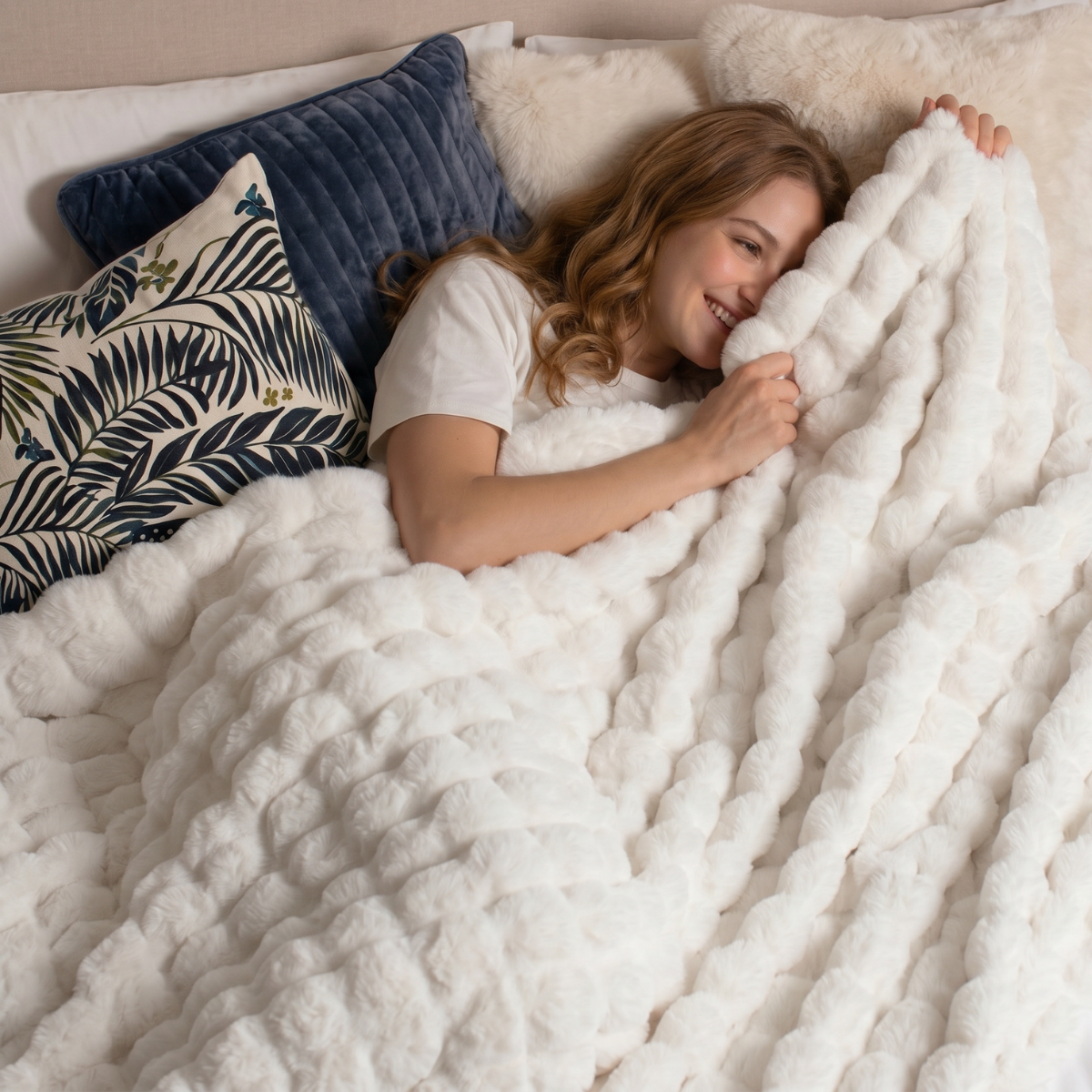
Texture also helps a small room feel more comfortable. A knit blanket can add visual interest to simple bedding without introducing too many competing colors or patterns.
Make the Bed Work as a Reading Area

In most dorm rooms, the bed is the largest piece of furniture. It naturally becomes a place to read, watch videos, call family, or relax between classes.
Leaning directly against a wall or metal headboard becomes uncomfortable quickly. A backrest pillow can make sitting on the bed more supportive by giving the back and arms somewhere to rest.
It is useful for casual reading, watching lectures, or short laptop sessions. It should not replace a properly adjusted desk chair for hours of studying, but it can make the room more functional when floor space and seating are limited.
A removable or washable cover is especially helpful because a backrest pillow will probably be used often. Cooling fabric may also feel better in warm rooms, while plush or faux-fur surfaces suit students who prefer a softer, cozier texture.
Keep Extra Pillowcases Within Reach
Pillowcases are small, inexpensive, and easy to forget until laundry day.
They also come into close contact with sweat, skin oils, hair products, and skincare every night. Bringing at least two sets makes it easier to change them regularly without waiting for a full load of laundry.
Cooling pillowcases can be useful for students who often wake up feeling warm around the head and neck. A smooth surface may also feel more comfortable against the skin, but the correct size still matters. Check whether the pillow is Standard, Queen, or King before buying.
Extra pillowcases take up very little storage space and are more practical than bringing several decorative pillows that eventually end up on the floor.
Keep the Room Personal but Simple
A dorm room should feel personal, but it does not need to be filled on move-in day.
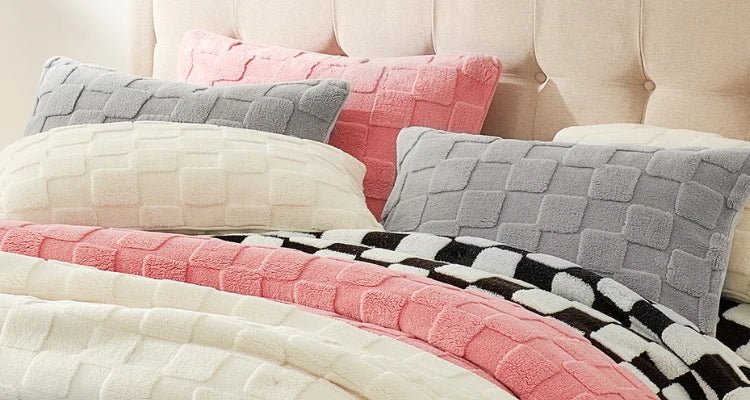
Start with one main bedding color and add a second shade or texture through the knit blanket and pillowcases. This keeps a small room from feeling visually crowded and makes future replacements easier.
White and cream make a room feel lighter, while blue, gray, green, and warm neutrals are easy to coordinate. A patterned knit blanket can add personality without requiring a full themed bedding set.
It is also sensible to wait until after moving-in before buying too many extras. Seeing the actual room makes it easier to judge how much storage, wall space, and seating are available.
A Practical Freshman Bedding Checklist
A simple setup is usually enough:
1. Two correctly sized sheet sets
2. One lightweight or cooling comforter
3. One washable duvet cover
4. At least two sets of pillowcases
5. One versatile knit blanket
6. One backrest pillow when the bed will also be used for reading or relaxing
Large collections of decorative pillows, several heavy blankets, and oversized accessories can wait. Dorm rooms have limited storage, and anything rarely used becomes difficult to manage by the end of the semester.
Build a Room for the Whole School Year
The best dorm room essentials are not the ones that look most impressive on move-in day. They are the ones that still feel useful during midterms, laundry delays, temperature changes, and late-night study sessions.
Start with the correct sheet size. Add a comforter that can be layered, a washable duvet cover, and extra pillowcases. A knit blanket brings flexible warmth, while a backrest pillow helps the bed function as a comfortable daytime space.
A thoughtful bedding setup can make a small dorm or student apartment feel settled and personal without filling it with things that will be forgotten after the first few weeks.
Frequently Asked Questions
What bedding size do most college dorms use?
Many U.S. Residence halls use Twin XL mattresses, usually about 36 × 80 inches. Always confirm the measurements with the college before purchasing.
How many sheet sets should a freshman bring?
Two sets are usually enough: one on the bed and one clean backup.
Is a cooling comforter useful in a dorm?
It can be helpful in warm residence halls or for students who naturally sleep hot. A lightweight comforter is also easier to layer when temperatures change.
Does a freshman need both a comforter and a knit blanket?
They serve different purposes. The comforter is the main sleep layer, while the knit blanket is useful for reading, lounging, or adding warmth when needed.
Is a backrest pillow worth bringing to college?
It is useful when the bed also serves as a reading or relaxation area, especially in a small room with limited seating.

Hinterlasse einen Kommentar
Diese Website ist durch hCaptcha geschützt und es gelten die allgemeinen Geschäftsbedingungen und Datenschutzbestimmungen von hCaptcha.